Every interior landscaping project starts differently.
Sometimes there is a complete architectural drawing with exact measurements, materials and finishes already specified. Sometimes there is an existing interior that needs to be complemented with greenery. And sometimes, all we receive is a simple sketch, a few dimensions and an idea of what the customer would like to achieve.
For us, that can already be enough to get started.
At Koberg, we have extensive experience supplying plants and planters for professional interior landscaping projects. Alongside our broad collection of standard planters, we increasingly work with bespoke steel planters that are manufactured specifically for a project.
Why?
Because not every space can – or should – be designed around standard planter dimensions.
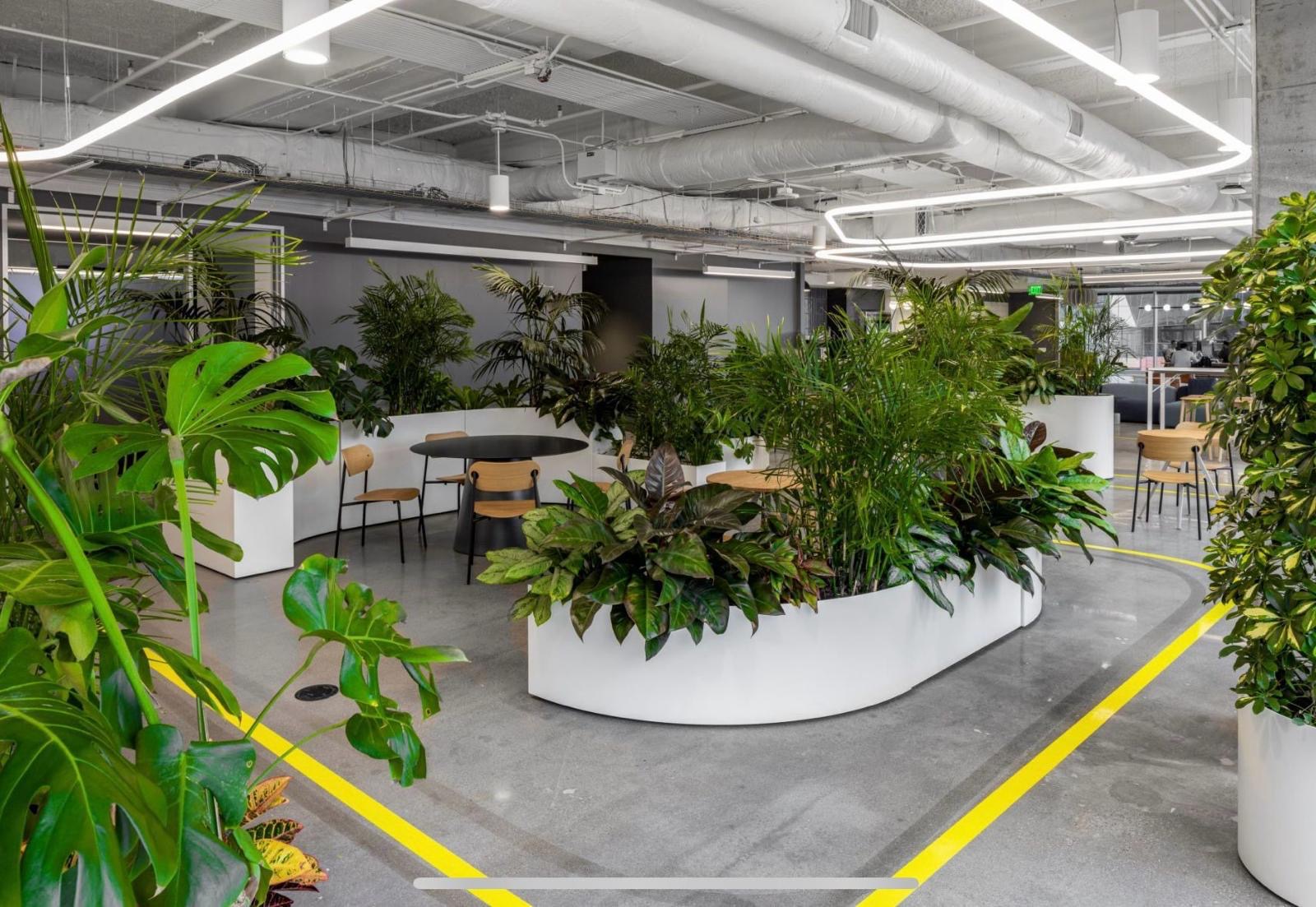
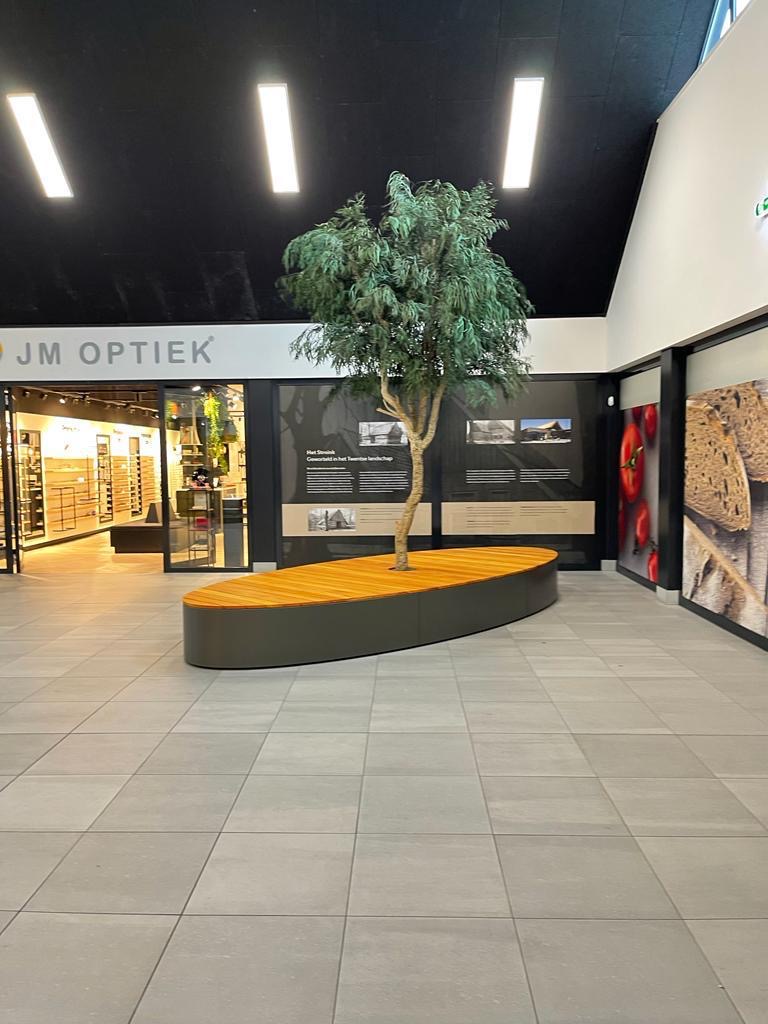
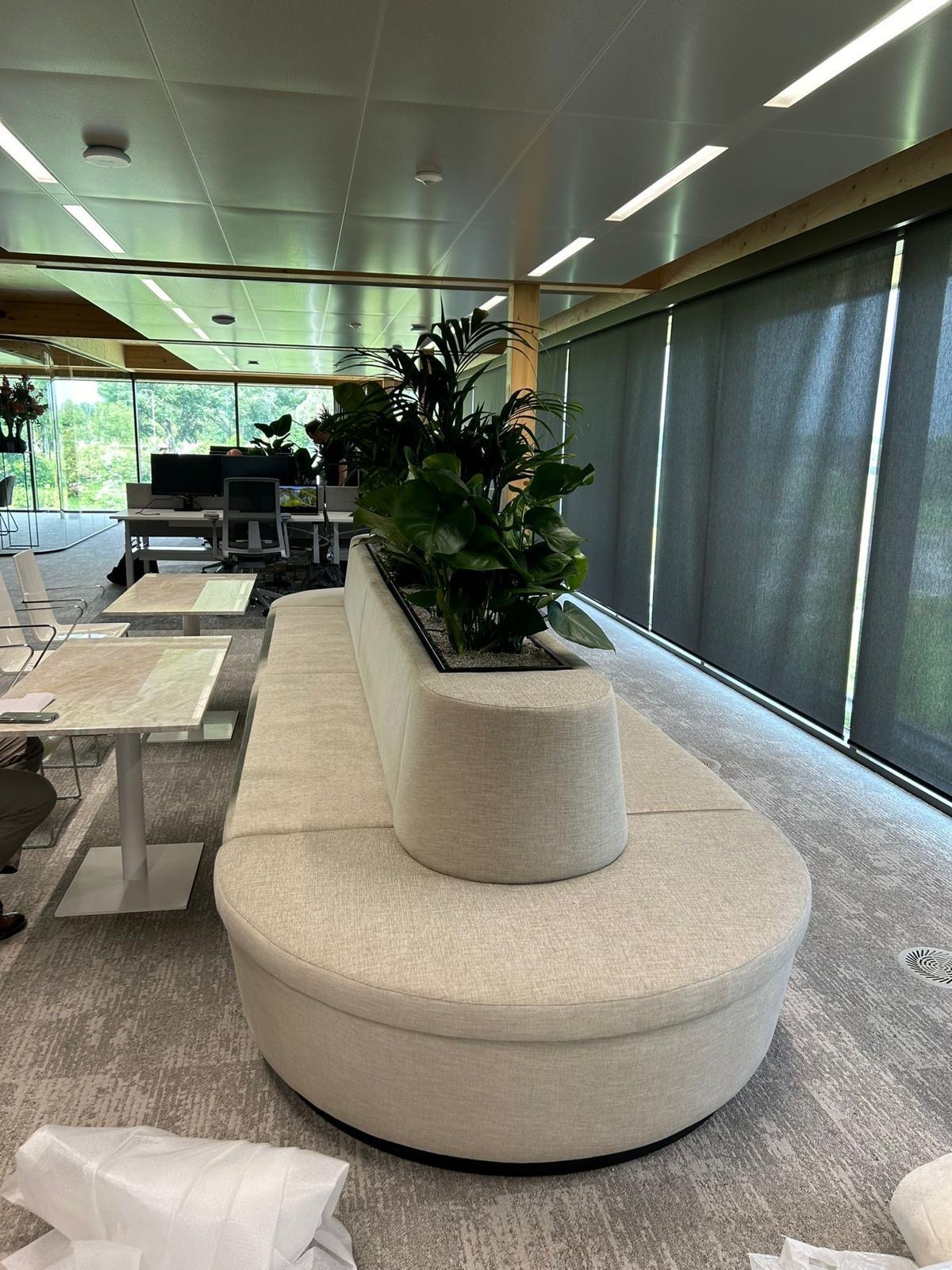
A planter may need to follow the exact curve of a seating area. It may need to divide two working environments without creating a solid wall. It might need to accommodate several large plants in a single continuous structure. Or perhaps the planter itself needs to become an architectural feature within the interior.
That is where bespoke steel opens up a completely different range of possibilities.
From a simple sketch to a bespoke planter
One of the biggest misconceptions surrounding bespoke products is that the customer needs to provide a fully engineered technical drawing before anything can happen.
That is not necessarily the case.
A sketch, some basic measurements and a clear explanation of what you are trying to achieve can already take us a long way.
Tell us where the planter needs to be positioned, approximately how large it needs to be and what function it should fulfil. From there, our team can help translate the concept into a realistic solution.
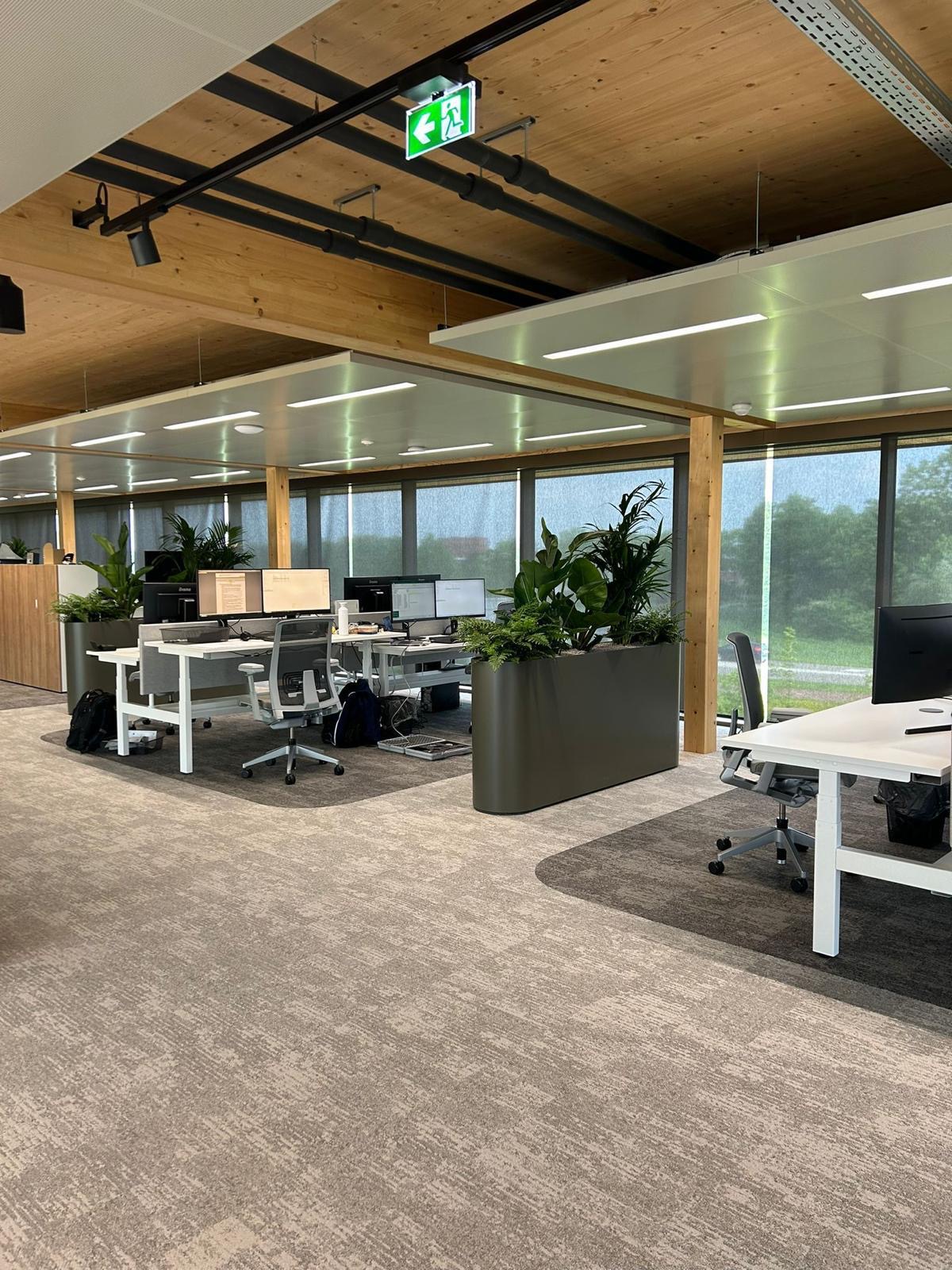
Perhaps you need a long rectangular planter to separate desks in an office.
Perhaps the planter needs rounded corners because it will be positioned in a busy public area.
Or perhaps you have an unusual space where a standard square or rectangular planter simply does not work.
These are exactly the types of enquiries our team enjoys working on.
Our specialists are accustomed to looking beyond the dimensions of a planter. We consider how the product will function within the complete environment and how plants, planter, architecture and usage can work together.
The objective is not simply to manufacture what was drawn.
The objective is to help turn an initial idea into a finished product that can exceed expectations.
Why choose bespoke steel planters?
Fibreglass planters are familiar territory for many interior landscapers. They are lightweight, versatile and available in an enormous range of shapes, colours and sizes.
And there is a good reason why fibreglass remains such a popular material.
However, it is not the only solution.
For certain projects, steel planters can offer exactly the characteristics required.
Steel provides a particularly architectural appearance and works extremely well within modern offices, hospitality environments, retail locations and public spaces. It can create clean lines, substantial dimensions and structures that become part of the interior rather than simply an object placed within it.
One of the main advantages is the freedom that comes with custom manufacturing.
Instead of searching through catalogues for a planter that comes close to the required dimensions, the planter can be created specifically for the available space.
That difference can be significant.
A gap of ten centimetres may sound insignificant on paper. In a carefully designed office, restaurant or retail environment, however, it can determine whether a planter looks integrated or added afterwards.
With bespoke manufacturing, the space becomes the starting point.
Not the catalogue.
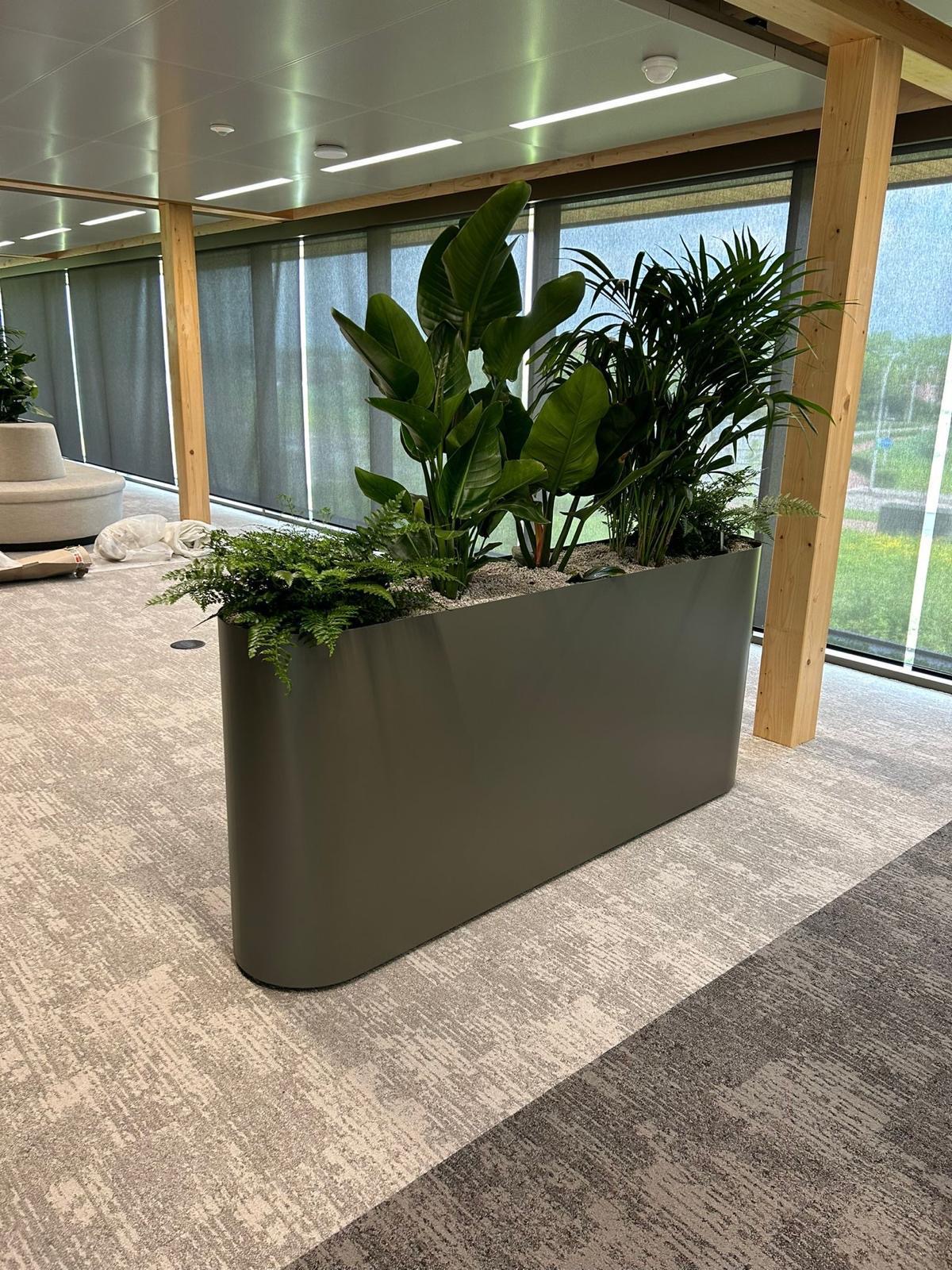
More than just rectangular plant containers
When people first hear steel planter, they often imagine a large rectangular box.
That is certainly possible – and sometimes exactly what a project needs – but bespoke manufacturing allows us to go much further.
Curves can be introduced into a design. Different heights can be combined. Long planting structures can follow architectural lines. Planters can be designed around columns, furniture or existing elements within a building.
They can even become part of seating solutions or larger interior structures.
This means that greenery no longer needs to be treated as the final decorative layer of a project.
The planter itself can become part of the architecture.
A large planted structure can guide visitors through a building, separate different functional areas or create privacy between workplaces without closing the environment.
In open-plan offices especially, this can be extremely effective.
Rather than introducing another wall, greenery can create a natural separation while maintaining an open and welcoming atmosphere.
Already used across many different environments
The versatility of bespoke steel planters is reflected in the variety of locations where they are already being used.
Through the projects and customers we work with, these solutions have found their way into offices, shops, restaurants, shopping streets, swimming pools, retail environments and other commercial and public spaces.
Each environment comes with different requirements.
A planter used in a restaurant needs to complement the interior while helping create atmosphere and separation between seating areas.
In an office, the same type of product may be used to divide workplaces, create green meeting areas or soften large open spaces.
Retail environments often require something different again. There, dimensions, visitor flows and visual impact can become particularly important.
For public spaces and shopping streets, durability and scale can play a larger role.
That diversity is exactly why working with custom dimensions can be so valuable.
There is no universal planter that works perfectly everywhere.
Designed around the plants
For Koberg, the planter is only one part of the equation.
The plants that eventually go inside it are equally important.
As a specialist in plants and pots, we can look at both elements together. This is particularly valuable when working on larger bespoke projects.
The proportions of a planter should make sense in relation to the planting.
A large architectural planter with plants that are too small can look unfinished. At the same time, large plants require sufficient space and the right planting conditions.
By considering these factors early in the process, the planter and greenery can be developed as one concept.
This can result in combinations of palms, large-leaved tropical plants, ferns and lower planting that create depth and variation.
The result is much more than simply placing several individual plants next to each other.
It becomes a complete planted landscape.
A solution that keeps customers coming back
Perhaps one of the strongest indicators that bespoke steel works is the number of customers who return with new requests.
Once a customer has experienced what is possible with custom manufacturing, the conversation for the next project often becomes much easier.
Instead of asking:
"Do you have a planter that might fit here?"
the question becomes:
"Can we make something for this space?"
And that is a completely different starting point.
We already work with returning customers who repeatedly order bespoke solutions for new locations and projects.
For us, that trust is important.
It means customers know they can approach Koberg with an unusual request, an awkward dimension or even an idea that has not yet been completely worked out.
Together, we can explore what is possible.
You don't always need to know exactly what you need
For interior landscapers, architects and project specialists, every project has its own challenges.
Sometimes the required solution is immediately obvious.
Sometimes it is not.
You may have a photograph of the location, approximate measurements and a rough drawing. Perhaps your client has shown you something they like but needs it adapted to completely different dimensions.
That is fine.
Send it to us.
Our team specialises in these kinds of enquiries and can help determine how the concept could be developed further.
The initial information can be surprisingly simple:
- a sketch or reference image;
- the required or approximate dimensions;
- photographs of the location;
- the intended application;
- an indication of the preferred colour or finish;
- and, where relevant, the type or size of plants that will be used.
From there, we can start looking at the possibilities.
For more complex projects, further technical details can naturally be developed during the process.
The important thing is that you do not need to have every answer before contacting us.
From one planter to complete projects
Bespoke steel is equally interesting for a single statement planter and for larger project-based applications.
A project might require one large central planter in a reception area.
Another could involve dozens of planters across several floors of an office building.
Retail and hospitality projects may require the same design to be repeated across different areas or locations, while maintaining consistent dimensions and finishes.
This is where a project-based approach becomes particularly valuable.
Instead of treating every planter as an isolated product, we can look at how the different elements relate to one another.
The result can be a much more coherent overall design.
For professional interior landscapers, that also creates opportunities to offer their customers something that cannot simply be selected from a standard catalogue.
Steel or fibreglass? It does not have to be either-or
We certainly do not see bespoke steel as a replacement for fibreglass.
Both materials have their place.
Fibreglass remains an excellent choice for many applications, particularly when low weight, familiar shapes and a broad standard collection are priorities.
Steel becomes particularly interesting when custom dimensions, architectural integration, large formats or project-specific designs become more important.
In many projects, the two can even complement one another.
Standard fibreglass planters can be used throughout general areas, while bespoke steel solutions create larger architectural elements in reception areas, meeting spaces, restaurants or communal zones.
The question therefore is not:
"Which material is better?"
The better question is:
"Which solution is most suitable for this particular project?"
That is exactly how we prefer to approach it.
Made for spaces where standard products stop
The strongest bespoke solutions often begin with a problem.
The dimensions are unusual.
The planter needs to follow a wall.
The architect wants a specific radius.
The customer wants greenery incorporated into seating.
A large area needs to be divided without introducing walls.
Or perhaps there is simply nothing in the standard collection that creates the desired impact.
These are not necessarily limitations.
They can be the starting point for something better.
With the right combination of steel, greenery and project knowledge, a functional requirement can become one of the defining elements of a space.
And that is ultimately what makes bespoke work interesting for us.
Have an idea? Send us your sketch.
You do not need to arrive with a finished technical specification.
If you are working on a project and believe a bespoke steel planter could be the solution, send us your idea, sketch, measurements or photographs of the location.
Even if the concept is still in its early stages.
Our team can look at the request with you and help determine what is possible.
From office environments and restaurants to shops, shopping streets, swimming pools and large-scale commercial projects, we have already seen how customised greenery solutions can completely transform a space.
And sometimes it all starts with nothing more than a few lines on a piece of paper.
Your space. Your dimensions. Your idea.
Let’s turn it into something green.