Terrariums have become one of the most popular ways to introduce greenery into both residential and commercial interiors. From modern office buildings and hotel lobbies to restaurants, reception areas and retail environments, a well-designed terrarium combines natural beauty with relatively low maintenance.
Although terrariums are often associated with decorative home projects, they are increasingly used within professional interior landscaping because they create a unique visual experience while requiring minimal space. Whether you are designing a reception desk feature, upgrading an office workspace or creating a statement piece for a hospitality project, building a terrarium correctly is essential for long-term success.
Many people assume that setting up a terrarium is simply a matter of placing plants inside a glass container. In reality, a successful terrarium functions as a carefully balanced ecosystem. Every layer has a purpose, every plant has specific environmental requirements and every design decision influences the long-term health of the miniature landscape.
This guide explains how to build a professional terrarium step by step. You'll discover which materials to use, how to create the correct drainage system, which plants perform best and how to avoid the most common mistakes. Whether you're creating an open terrarium, a closed terrarium, a glass terrarium or a commercial terrarium for an office or hospitality project, these principles will help you achieve the best possible result.
What Is a Terrarium?
A terrarium is a miniature indoor ecosystem created inside a transparent glass container. Depending on the chosen design, it can either remain open to the surrounding environment or become a self-sustaining ecosystem with a sealed lid.
The popularity of terrariums has grown rapidly within commercial interiors because they combine aesthetics with functionality. They require significantly less space than traditional planting while offering the same natural appearance that contributes to biophilic design.
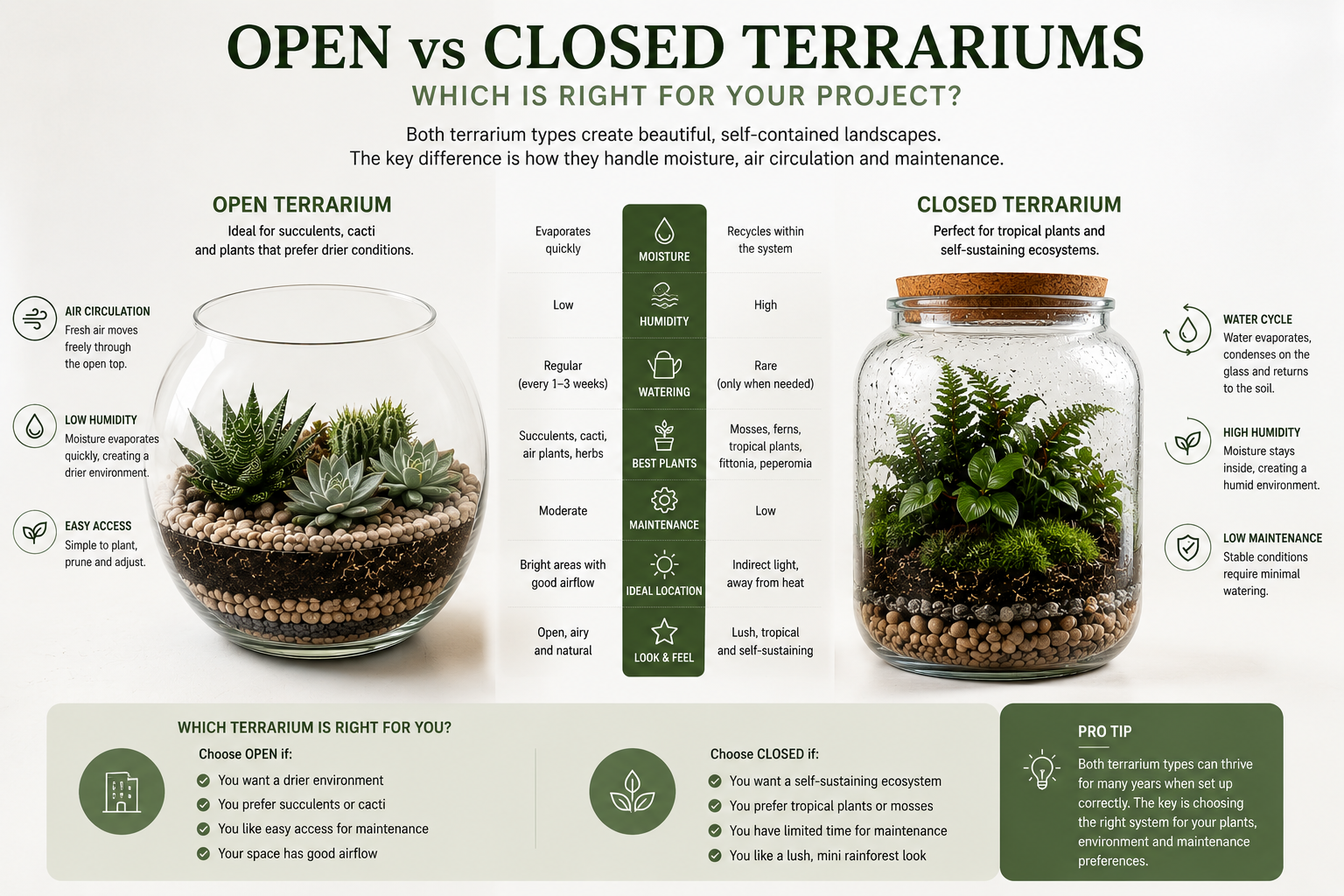
An open terrarium allows fresh air to circulate continuously. This makes it suitable for succulents, cacti and other plants that prefer dry conditions.
A closed terrarium, on the other hand, creates a humid microclimate. Water evaporates from the soil, condenses against the glass and returns to the substrate, creating a natural water cycle that significantly reduces maintenance.
Choosing between these systems depends on plant selection, indoor climate and the intended commercial application. If you're unsure which system best suits your project, read our complete guide comparing Open vs Closed Terrariums.
Choosing the Right Glass Container
Every successful terrarium starts with selecting the correct container. While almost any transparent vessel can technically be used, professional results require careful consideration of size, shape and airflow.
For an open terrarium, wide glass bowls or open cylinders provide excellent air circulation and easy access for maintenance. These containers are ideal for plants that dislike excessive humidity and are frequently used in office receptions, meeting rooms and restaurants.
A closed terrarium generally uses a glass jar or vessel with a removable lid or cork. The enclosure allows moisture to circulate naturally, creating a stable environment for tropical species.
The size of the container should always correspond with the mature size of the selected plants. One of the most common mistakes is choosing a container that is too small, causing plants to outgrow the available space within a relatively short period.
Glass quality also matters. High-quality clear glass provides maximum visibility and allows sufficient natural light to reach every part of the ecosystem, making it particularly suitable for premium commercial interiors.
What You'll Need
Building a professional terrarium requires more than simply adding soil and plants. Each layer contributes to drainage, water regulation and plant health.
The foundation starts with decorative stones or expanded clay pebbles, which create a drainage reservoir that prevents excess water from accumulating around the roots. Above this sits a thin layer of activated charcoal. Although often overlooked, activated charcoal plays an essential role by filtering impurities, reducing unwanted odours and helping prevent mould development.
Next comes a specialised terrarium substrate. Unlike standard potting soil, terrarium substrate is lighter, drains efficiently and allows roots to develop within a controlled environment.
Finally, carefully selected plants complete the ecosystem. Choosing plants with similar humidity and light requirements is essential. Mixing tropical plants with succulents, for example, usually leads to poor long-term performance because each group requires completely different growing conditions.
Professional designers often finish the terrarium using decorative stones, preserved moss, bark or natural wood. These elements not only improve aesthetics but also help create a realistic miniature landscape.
Step 1 – Creating the Drainage Layer
The drainage layer is arguably the most important part of every terrarium. Although it remains hidden beneath the substrate, it determines how effectively excess water is managed throughout the life of the ecosystem.
Unlike traditional flower pots, terrariums usually have no drainage holes. Any excess water therefore remains inside the container. Without a dedicated drainage layer, water quickly accumulates around the roots, leading to root rot, fungal growth and plant decline.
Professional terrariums typically use expanded clay pebbles or decorative gravel to create this reservoir. The exact depth depends on the size of the container, but the principle remains the same: water should collect below the root zone rather than surrounding it.
For commercial terrariums used in offices, hotels or retail environments, an effective drainage layer also reduces maintenance requirements because minor overwatering becomes far less problematic.
When viewing a professionally built terrarium in cross-section, the drainage layer forms the first visible structural component beneath the substrate, supporting the entire ecosystem above it.
(Insert Cross Section Infographic Here)
Step 2 – Adding Activated Charcoal
Once the drainage layer has been completed, the next step is adding activated charcoal.
Although this layer is relatively thin, its impact on the health of the terrarium is significant. Activated charcoal acts as a natural filtration system by absorbing impurities, reducing bacterial growth and helping prevent unpleasant odours that may develop inside enclosed glass environments.
In closed terrariums, activated charcoal becomes even more important because moisture remains trapped within the ecosystem. Without proper filtration, excessive humidity can increase the likelihood of mould development over time.
Professional interior landscapers rarely skip this layer because it contributes directly to the long-term stability of the ecosystem. It also improves water quality by filtering dissolved organic compounds before they accumulate within the substrate.
For projects installed in commercial environments where maintenance visits are limited, activated charcoal represents a relatively small investment that delivers substantial long-term benefits.
Step 3 – Choosing the Right Terrarium Substrate
The substrate forms the growing medium in which plants establish their root systems. Selecting the correct substrate is essential for creating a healthy terrarium that continues to perform for many years.
Standard garden soil is rarely suitable. It often contains excessive organic material, retains too much water and compacts over time, reducing oxygen availability around the roots.
Professional terrarium substrate is specifically designed to remain light, well-draining and breathable. It allows roots to expand naturally while maintaining sufficient moisture for healthy plant growth.
The depth of the substrate depends on the selected plants. Mosses require relatively shallow rooting zones, whereas larger tropical foliage plants benefit from a deeper growing layer that supports stronger root development.
At this stage it is also worth considering the final landscape design. Small hills, slopes and elevation changes create a more natural appearance while adding visual depth to the finished terrarium.
A well-designed substrate layer not only supports plant health but also transforms a simple glass container into a living landscape that remains attractive for years with relatively little maintenance.
Step 4 – Positioning the Plants
With the foundation complete, it's time to position the plants. This is the stage where the terrarium begins to transform from a layered glass container into a living ecosystem.
Start with the largest plant first, positioning it slightly off-centre to create a more natural composition. Smaller plants can then be placed around it to add depth and variation. Professional interior landscapers rarely position plants symmetrically, as irregular layouts more closely resemble natural landscapes and create greater visual interest.
Plant selection should always match the type of terrarium you are building. Open terrariums perform best with succulents, cacti, Haworthia, Aloe and Echeveria, as these species prefer drier conditions and benefit from continuous airflow.
Closed terrariums support a completely different plant palette. Tropical foliage plants such as Fittonia, Peperomia, miniature ferns and various moss species thrive in the humid microclimate created by a sealed glass container.
Avoid combining plants with conflicting environmental needs. Mixing succulents with tropical plants is one of the most common reasons why terrariums fail. Although the arrangement may initially look attractive, one group of plants will inevitably receive unsuitable growing conditions.
For commercial interior projects, consistency is equally important. Using plants with similar growth rates ensures that the terrarium maintains its original appearance for a longer period and reduces future maintenance requirements.
Step 5 – Adding Decorative Elements
Once the plants have been positioned, decorative materials complete the overall design.
Natural stones, preserved moss, bark, driftwood and decorative gravel help create a miniature landscape while enhancing the premium appearance of the terrarium. Rather than covering the entire soil surface, decorative materials should complement the planting design and guide the viewer's eye through the composition.
For commercial terrariums in offices, hotels and reception areas, a clean and minimalist design often delivers the strongest visual impact. Too many decorative elements can distract from the plants themselves, whereas a carefully balanced composition reinforces the natural character of the ecosystem.
Colour selection also deserves attention. Neutral stones and natural wood generally integrate well into modern commercial interiors, while preserved moss can introduce subtle colour variation without increasing maintenance requirements.
Professional designers often incorporate different heights and textures to create a landscape that appears larger than the container itself. Even within a relatively small glass terrarium, carefully placed decorative elements can generate remarkable depth.
Step 6 – Watering Your Terrarium Correctly
Water management determines whether a terrarium remains healthy for years or begins to decline after only a few weeks.
Newly planted terrariums require only a small amount of water. The objective is to lightly moisten the substrate rather than saturate it. Excess water is one of the most common causes of root rot, mould and algae growth.
Open terrariums lose moisture continuously through evaporation and therefore require occasional watering depending on the indoor climate. Commercial offices with air conditioning often dry out more quickly than residential environments, meaning watering schedules should always be adjusted to local conditions.
Closed terrariums behave very differently. After the initial watering, the internal water cycle begins to regulate itself. Moisture evaporates from the soil, condenses on the glass and returns to the substrate, allowing the ecosystem to recycle its own water for extended periods.
Light condensation during the morning is completely normal and often indicates that the moisture balance is functioning correctly. Continuous heavy condensation throughout the day, however, may indicate excessive watering. In that case, briefly opening the lid allows excess moisture to escape and helps restore equilibrium.
Understanding this balance is essential for anyone designing a self-sustaining terrarium intended for long-term commercial use.
Where Should You Place a Terrarium?
Location has a significant influence on the health and longevity of every terrarium.
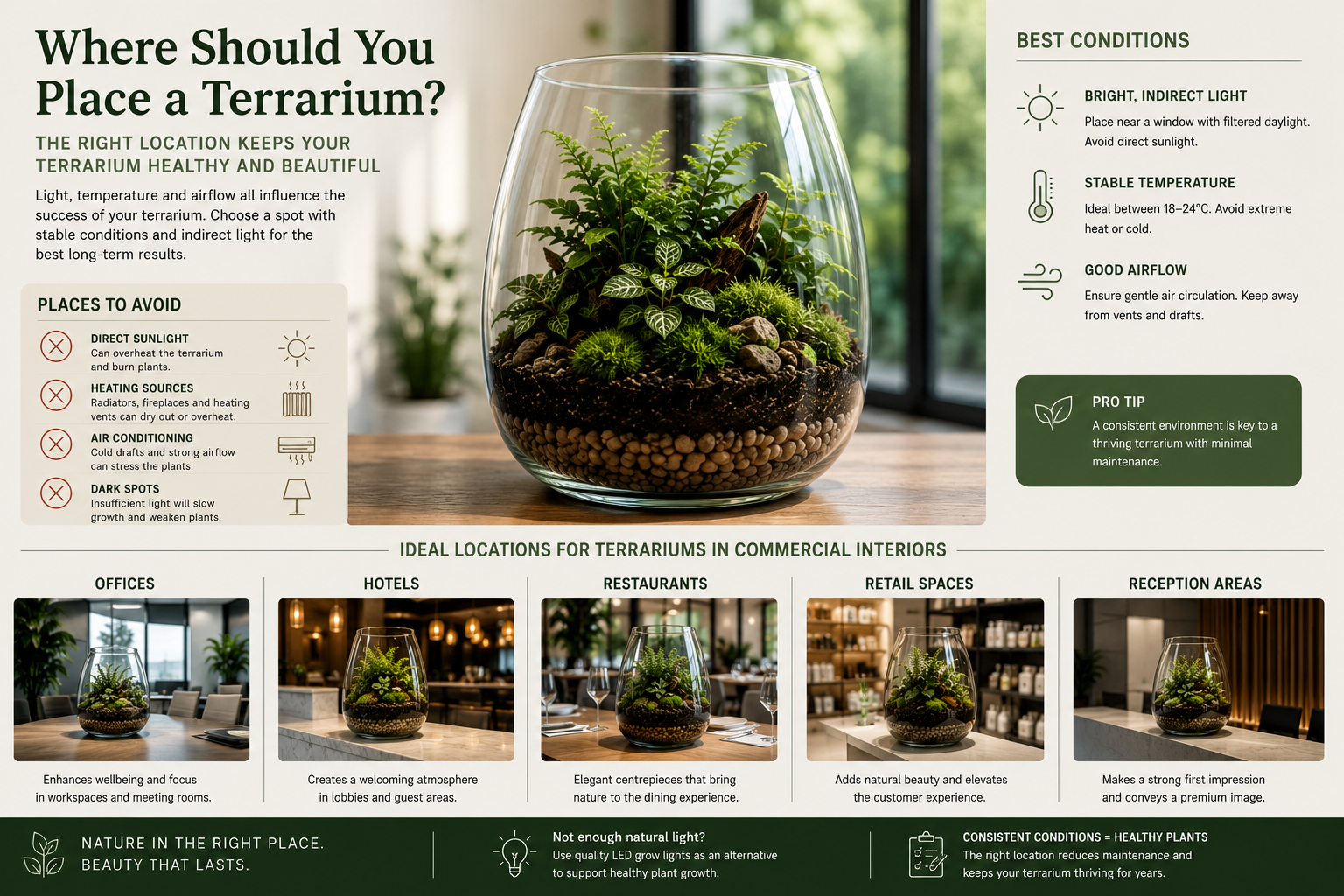
Bright, indirect daylight provides the most favourable conditions for both open and closed systems. Direct sunlight should generally be avoided, particularly with closed terrariums, as the glass can rapidly increase internal temperatures and damage sensitive plants.
Within commercial interiors, terrariums are frequently positioned on reception desks, meeting tables, coffee areas and waiting rooms where they become natural focal points without occupying large amounts of space.
Hotels often integrate terrariums into lounge areas to reinforce biophilic design concepts, while restaurants use them as decorative centrepieces that require relatively little maintenance compared with traditional floral arrangements.
Retail environments also benefit from strategically positioned terrariums that soften architectural lines and create a more welcoming atmosphere for visitors.
Common Mistakes When Setting Up a Terrarium
Many terrarium problems can be traced back to a handful of common mistakes made during construction.
Using ordinary garden soil often leads to poor drainage and excessive moisture retention. Skipping the drainage layer increases the risk of root rot, while omitting activated charcoal reduces the ecosystem's natural filtration capacity.
Overwatering remains by far the most frequent problem. Because terrariums have no drainage holes, excess water cannot escape. A small amount of additional water may seem insignificant, but over time it can dramatically affect plant health.
Incorrect plant combinations are another major issue. Succulents and tropical plants require fundamentally different humidity levels, making them unsuitable companions within the same terrarium.
Finally, placing a terrarium in direct sunlight often causes overheating. Especially in closed glass containers, temperatures can rise surprisingly quickly, placing unnecessary stress on the plants.
Avoiding these mistakes dramatically increases the lifespan and visual quality of the finished terrarium.
Terrarium Maintenance
Although terrariums are widely recognised as low-maintenance planting solutions, they still benefit from occasional inspection.
Healthy leaves should remain vibrant and firm, while dead foliage should be removed promptly to prevent unnecessary decomposition inside the ecosystem.
Cleaning the glass periodically improves visibility and allows more natural light to reach the plants. Dust accumulation is more common in open terrariums because they remain exposed to surrounding air circulation.
Closed terrariums require less frequent intervention, although checking condensation levels remains important. A healthy ecosystem typically reaches a stable moisture balance within the first few weeks after installation.
Professional commercial terrariums can remain attractive for many years with only minimal maintenance when built correctly from the beginning.
Commercial Applications for Terrariums
Terrariums are increasingly used in commercial environments because they combine natural aesthetics with operational efficiency.
In office environments, they introduce greenery without requiring large floor areas, making them ideal for meeting rooms, reception desks and collaborative workspaces.
Hotels frequently use bespoke glass terrariums as premium decorative features that reinforce luxury interiors while requiring considerably less maintenance than fresh floral arrangements.
Retail environments benefit from terrariums by creating visually engaging displays that strengthen the customer experience and support contemporary store design.
Healthcare facilities, waiting rooms and educational buildings increasingly incorporate indoor planting to improve the overall atmosphere and contribute to biophilic design principles.
For interior landscapers managing projects across multiple locations, terrariums provide a scalable planting solution that combines consistency, sustainability and long-term visual quality.
Conclusion
A successful terrarium is far more than a decorative glass container. It is a carefully balanced ecosystem in which every layer, every plant and every design decision contributes to long-term performance.
Whether you choose an open terrarium for drought-tolerant plants or a closed terrarium that creates its own humid microclimate, success always begins with proper construction. By selecting the right materials, using an effective drainage system and matching plant selection to the intended environment, you create a living landscape that remains healthy and attractive for years.
As commercial interiors continue to embrace biophilic design, terrariums offer an elegant way to introduce nature into offices, hotels, retail environments and hospitality spaces without demanding intensive maintenance.
Looking for a Professional Terrarium Solution?
At Koberg, we design and supply bespoke terrariums for offices, hotels, restaurants, retail spaces and commercial interiors across Europe. Whether you require a single statement piece or a complete interior planting concept, our specialists combine more than 55 years of horticultural expertise with a trusted European grower network to deliver sustainable green solutions tailored to every project.
From custom glass terrariums and premium planters to complete interior landscaping concepts, we help businesses create inspiring spaces that leave a lasting impression.
Contact our team to discuss your project or request a personalised quotation, or check the website.
Frequently Asked Questions
What is the first layer in a terrarium?
The first layer should always be a drainage layer made from expanded clay pebbles or decorative gravel. This prevents excess water from collecting around the roots.
Why do terrariums need activated charcoal?
Activated charcoal filters impurities, reduces unpleasant odours and helps prevent mould development, especially in closed terrariums.
Can I use normal potting soil?
Standard potting soil is generally too dense and retains excessive moisture. A specialised terrarium substrate provides better drainage and healthier root development.
How much water does a terrarium need?
Open terrariums usually require light watering every few weeks, while closed terrariums often need only occasional watering once their internal water cycle has stabilised.
Where should I place my terrarium?
Place your terrarium in bright, indirect light. Avoid prolonged direct sunlight, particularly for closed terrariums.
Which plants are best for beginners?
Succulents are ideal for open terrariums, while Fittonia, mosses and miniature ferns are excellent choices for beginners creating closed terrariums.
How long does a terrarium last?
A professionally built terrarium can remain healthy for many years with proper care and occasional maintenance.
Why is my terrarium growing mould?
Mould is usually caused by excessive moisture, poor airflow or inadequate drainage. Correct layering and appropriate watering help prevent this issue.
Are terrariums suitable for offices?
Yes. Terrariums are increasingly used in offices because they require relatively little maintenance while adding a natural, high-quality appearance to commercial interiors.
Can commercial terrariums be customised?
Absolutely. Professional terrariums can be tailored in terms of size, plant selection, glass design and decorative materials to suit the requirements of virtually any commercial project.