As sustainability becomes a priority for homeowners, businesses, architects, and developers alike, green roofs are becoming an increasingly popular investment. They don't just look beautiful—they provide practical benefits that improve a building's performance, reduce environmental impact, and even help lower long-term maintenance costs.
One of the most popular and accessible green roof solutions is a sedum roof. Whether you're looking to transform a garage, extension, office building, garden room, or commercial property, a sedum roof offers an attractive, low-maintenance way to make your building more sustainable.
At Koberg, we're committed to helping our customers build smarter and greener. That's why we're excited to announce that we will soon be significantly expanding our product range with a comprehensive selection of sedum roofing systems, accessories, and installation materials.
In this guide, we'll explain everything you need to know about sedum roofs, including how they work, their benefits, where they can be installed, and why they're becoming one of the fastest-growing roofing solutions across Europe.
What Is a Sedum Roof?
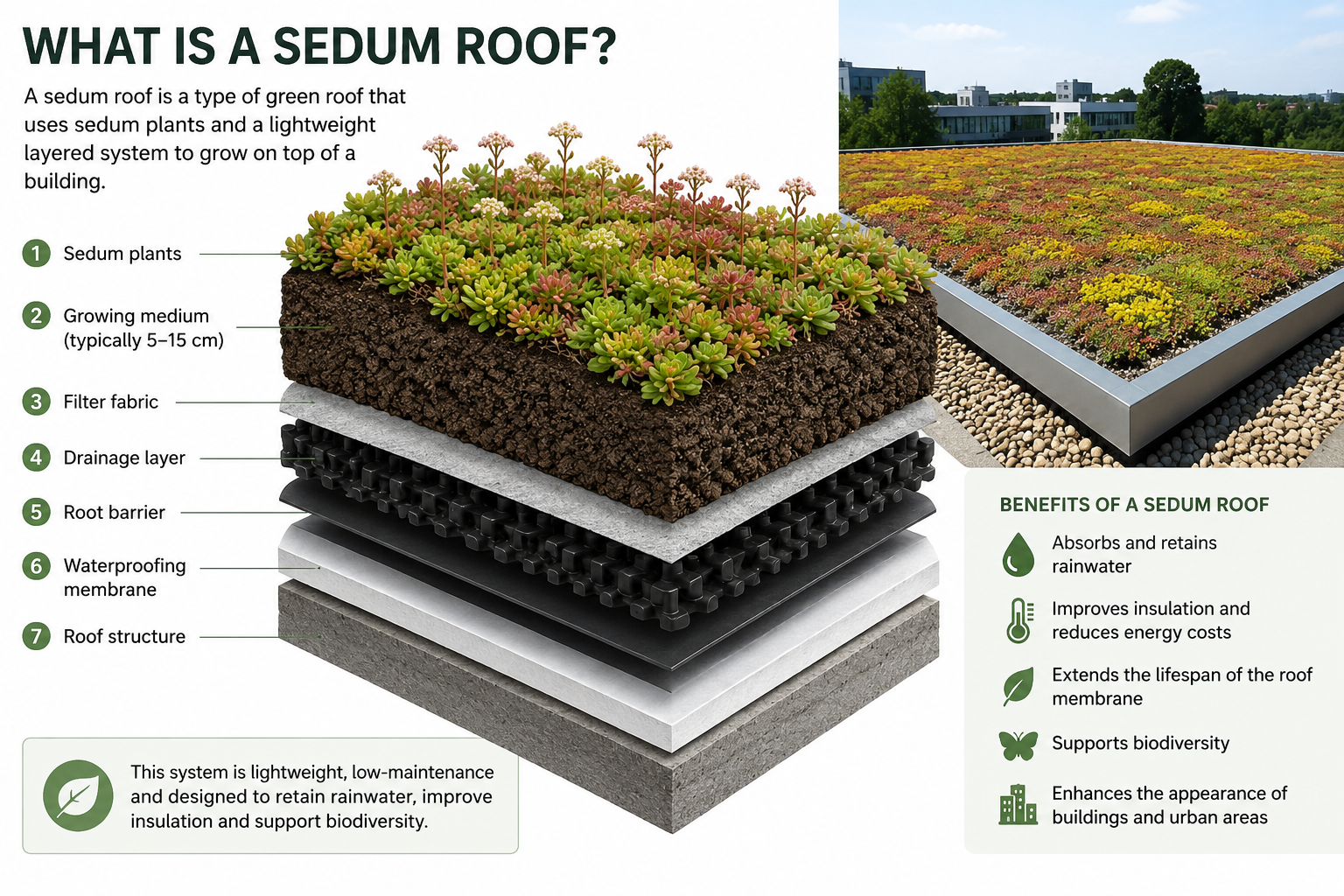
A sedum roof is a type of extensive green roof covered with specially selected varieties of sedum plants. Sedum is a hardy succulent that thrives in a wide range of climates and requires very little maintenance.
Unlike traditional gardens, sedum stores water in its leaves, making it highly resistant to drought while still surviving periods of heavy rainfall. This resilience makes it one of the best plant species for rooftop applications.
A typical sedum roof consists of several carefully designed layers, including:
- Waterproof roof membrane
- Root barrier
- Drainage layer
- Water retention layer
- Growing substrateSedum vegetation layer
- Together, these layers create a living ecosystem that protects the roof while delivering numerous environmental and economic benefits.
Why More People Are Choosing Green Roofs
Green roofs are no longer reserved for commercial buildings or modern architecture. Today, homeowners across Europe are embracing sedum roofs for their practical advantages, environmental value, and visual appeal.
As cities continue to grow, natural green spaces become increasingly limited. Installing vegetation on rooftops is an effective way to reintroduce nature into urban environments without requiring additional land.
A sedum roof transforms unused roof space into a living landscape that actively contributes to healthier cities.
The Benefits of a Sedum Roof
1. Improved Thermal Insulation
One of the biggest advantages of a sedum roof is its insulating performance.
During the summer months, the vegetation absorbs sunlight that would otherwise heat the roof surface. Instead of allowing temperatures to rise dramatically, the plants naturally cool the roof through evaporation.
In winter, the additional substrate and vegetation create an extra insulating layer that helps retain indoor heat.
The result is a more comfortable indoor climate throughout the year and potentially lower heating and cooling costs.
2. Longer Roof Lifespan
Traditional roofing materials are constantly exposed to:
- UV radiation
- Rain
- Snow
- Ice
- Wind
- Temperature fluctuations
Over time, these conditions cause roofing materials to deteriorate.
A sedum roof acts as a protective shield, significantly reducing exposure to harsh weather and sunlight. This protection can substantially extend the lifespan of the underlying roof membrane, delaying costly repairs or replacement.
For many building owners, this long-term protection alone makes a sedum roof a worthwhile investment.
3. Excellent Rainwater Management
Climate change is leading to increasingly intense rainfall across many parts of Europe.
One of the key functions of a sedum roof is rainwater retention.
Instead of allowing rainwater to immediately flow into drainage systems, the substrate absorbs and temporarily stores water. The plants then gradually release moisture back into the atmosphere through evaporation.
This process helps:
- Reduce pressure on drainage systems
Lower the risk of flooding
Slow stormwater runoff
Improve urban water management
Many municipalities actively encourage green roof installations because of these environmental benefits.
4. Increased Biodiversity
Even relatively small green roofs can create valuable habitats for wildlife.
Sedum flowers attract:
- Bees
- Butterflies
- Hoverflies
- Pollinating insects
Supporting pollinators has become increasingly important as natural habitats continue to decline.
Installing a sedum roof is a simple way for homeowners and businesses to contribute to local biodiversity while creating a healthier environment.
5. Better Sound Insulation
Vegetation naturally absorbs sound.
A sedum roof can help reduce noise from:
- Heavy rain
- Traffic
- Aircraft
- Industrial environments
This additional sound insulation contributes to a quieter indoor environment, especially for offices, garden rooms, studios, and homes located near busy roads.
6. Improved Air Quality
Plants naturally capture airborne dust particles and absorb carbon dioxide while releasing oxygen.
Although a single sedum roof won't solve urban pollution, widespread adoption of green roofs can make a meaningful contribution to cleaner air in towns and cities.
Every green roof helps.
7. Reduced Urban Heat Island Effect
Cities often become significantly warmer than surrounding rural areas due to concrete, asphalt, and roofing materials absorbing heat throughout the day.
Green roofs help counteract this phenomenon by cooling the surrounding air through evaporation and reducing heat absorption.
As more buildings incorporate vegetation, urban temperatures can gradually decrease.
8. Beautiful Natural Appearance
Practical benefits aside, a sedum roof simply looks fantastic.
Instead of seeing plain roofing material, you'll enjoy a vibrant carpet of living plants that changes appearance throughout the seasons.
Many sedum varieties produce colorful flowers during spring and summer, adding additional visual interest.
Whether installed on a garden office or a commercial building, a green roof instantly creates a premium appearance.
Where Can Sedum Roofs Be Installed?
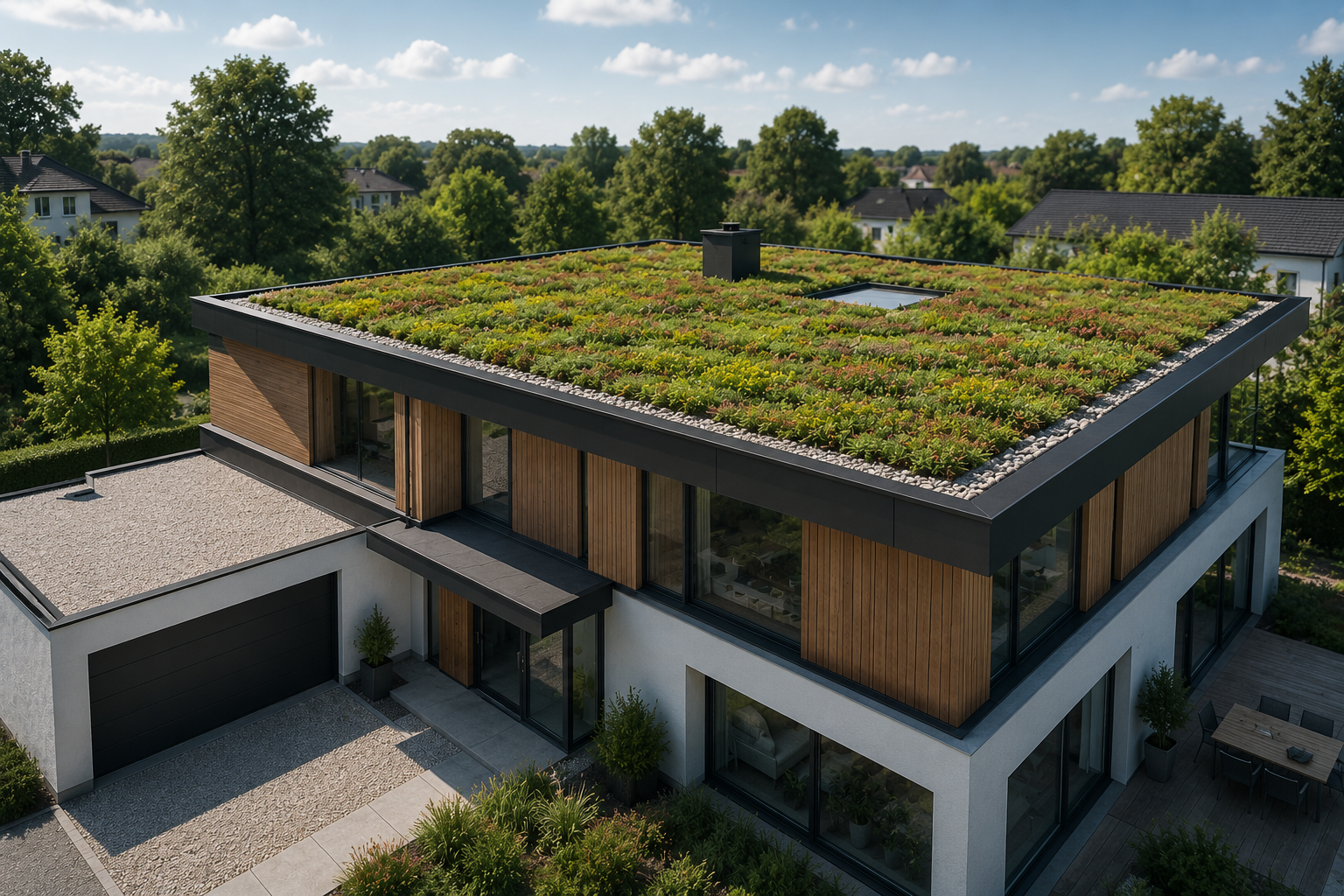
Sedum roofs are surprisingly versatile.
They are suitable for many types of buildings, including:
- Homes
- Garages
- Garden sheds
- Garden offices
- Carports
- Extensions
- Conservatories
- Commercial buildings
- Apartment complexes
- Schools
- Warehouses
- Restaurants
- Office buildings
Most installations are performed on flat roofs, although many systems are also suitable for gently sloping roofs.
Before installation, it's important to ensure that the roof structure can support the additional weight of the green roof system.
How Much Maintenance Does a Sedum Roof Require?
One of the reasons sedum roofs have become so popular is their low maintenance requirements.
Unlike traditional gardens, sedum does not require regular mowing or intensive watering.
Most roofs only require maintenance once or twice per year.
Typical maintenance includes:
- Removing weeds
- Checking drainage outlets
- Applying slow-release fertilizer
- Inspecting vegetation coverage
- Removing fallen leaves where necessary
- With minimal care, a well-installed sedum roof can remain healthy and attractive for decades.
Can You Install a Sedum Roof Yourself?
Many homeowners choose to install smaller sedum roofs themselves using complete installation kits.
These systems often include everything required:
- Drainage layer
- Filter fleece
- Growing substrate
- Sedum mats or trays
- Edge restraints
- Installation instructions
Larger commercial projects or roofs with complex drainage systems are generally best installed by experienced professionals.
Proper preparation ensures optimal drainage, plant health, and long-term performance.
Is a Sedum Roof Worth the Investment?
Although installing a green roof involves an upfront investment, many building owners recover value over time through multiple benefits.
These include:
- Extended roof lifespan
- Reduced maintenance of roof membranes
- Improved insulation
- Higher property appeal
- Environmental benefits
- Potential local subsidies in certain regions
- Increased sustainability credentials for businesses
As environmental regulations continue to evolve, investing in sustainable building solutions is becoming increasingly valuable.
Choosing the Right Sedum Roofing System
Not every green roof is identical.
The ideal system depends on several factors:
- Roof size
- Roof slope
- Structural load capacity
- Drainage requirements
- Climate conditions
- Desired appearance
- Budget
Selecting the right combination of drainage, substrate, vegetation, and edging ensures long-lasting performance.
Professional advice can help you choose the most suitable system for your specific project.
Sustainability Starts at the Top
Modern construction is increasingly focused on reducing environmental impact while improving building performance.
A sedum roof perfectly reflects this philosophy.
Instead of leaving unused roof space exposed to the elements, you transform it into a functional ecosystem that delivers measurable environmental benefits while enhancing the value of your property.
It's a practical investment that benefits both the building owner and the wider community.
Koberg Is Expanding Its Sedum Roof Range
At Koberg, we believe sustainable building materials should be accessible, reliable, and easy to install.
That's why we're excited to announce that we will soon be launching a significantly expanded range of sedum roof products designed for both residential and commercial projects.
Our upcoming collection will include:
- Complete sedum roof systems
- Sedum mats
- Sedum trays
- Drainage layers
- Water retention systems
- Growing substrates
- Edge restraints
- Root barriers
- Installation accessories
- Professional advice for every project
Whether you're creating a small green roof for your garden shed or designing a large commercial rooftop landscape, Koberg will provide everything you need to build a durable, attractive, and environmentally responsible green roof.
Our goal is to become your trusted partner for high-quality green roofing solutions, combining premium materials with expert knowledge and outstanding customer service.
Build Greener with Koberg
The future of construction is sustainable.
Sedum roofs represent one of the simplest and most effective ways to improve energy efficiency, protect roofing materials, increase biodiversity, and create healthier living environments. They transform ordinary rooftops into valuable green spaces that work for both people and nature.
As more homeowners, architects, and businesses embrace environmentally responsible building practices, green roofs are becoming an essential feature of modern construction.
At Koberg, we're proud to support this transition by offering high-quality sedum roof solutions that make sustainable building easier than ever. Our expanded product range will provide everything you need—from complete installation systems to expert guidance—so you can confidently create a roof that delivers lasting value for decades to come.
Stay tuned for the official launch of our sedum roofing collection, and discover how Koberg can help you bring your green roof project to life. Together, we can build stronger, smarter, and greener for the future.